
Mold problems are more common than most homeowners realize. The scary part is that mold is often hidden behind walls, under flooring, inside ceilings, or deep inside HVAC systems. Many people spend money on a traditional mold inspection only to keep dealing with strange smells, allergy symptoms, or ongoing moisture problems afterward.
That is because many traditional mold inspection methods only look at surface-level signs. If the mold is hidden, it can easily be missed.
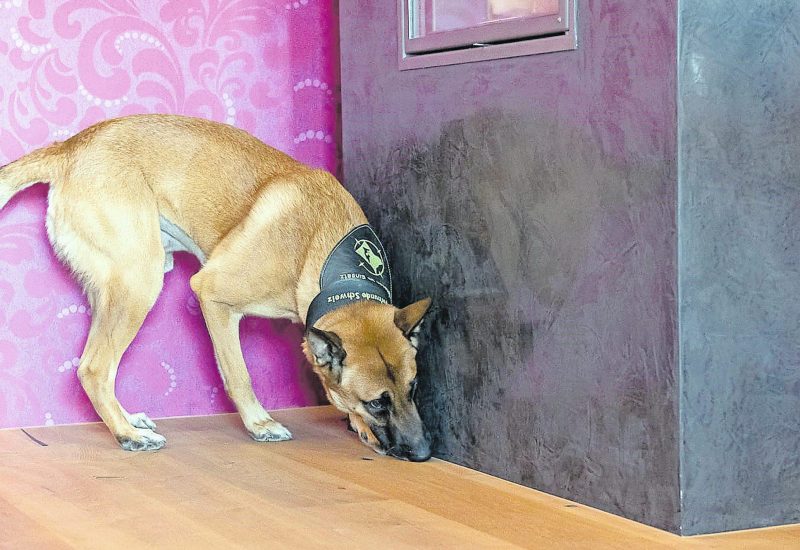
A trained mold sniffing dog changes that.
These highly trained dogs use their powerful sense of smell to locate hidden mold quickly and accurately. Instead of guessing where the problem may be, a mold sniffing dog helps pinpoint the exact area that needs mold testing or further inspection.
Traditional Mold Inspection Has Major Limitations
Most mold inspectors rely on visual checks, moisture meters, thermal cameras, and air samples. While these tools can help, they are not always enough to find hidden mold growth.
A traditional mold inspection may fail because:
- Mold is hidden behind drywall or flooring
- Air samples only capture mold spores floating at that moment
- Moisture may be present without visible mold
- Mold can grow in tiny hidden spaces
- HVAC systems can spread mold odors throughout the property
This often leads to incomplete answers. Homeowners may still notice musty smells, headaches, coughing, or allergy symptoms even after the inspection is finished.
That is frustrating when you are trying to protect your home and your health.
How a Mold Sniffing Dog Finds Hidden Mold Faster
A mold sniffing dog is trained to detect the scent of mold at extremely low levels. Their noses are far more sensitive than human detection tools. In fact, dogs can identify odors that humans would never notice.
During a mold inspection, the dog searches through the property and alerts the handler when mold odors are detected. This allows the mold inspector to narrow down the exact location before opening walls or starting costly demolition.
Instead of searching blindly, the inspection becomes targeted and efficient.
A mold sniffing dog can help locate mold in:
- Walls and ceilings
- Crawl spaces
- Attics
- HVAC systems
- Under sinks
- Behind cabinets
- Beneath flooring
- Around windows and leaks
This saves homeowners time, stress, and unnecessary repair costs.
Why Mold Testing Alone Can Miss the Real Problem
Many homeowners believe mold testing alone will give them all the answers. Unfortunately, that is not always true.
Air sampling and surface testing only capture information from specific areas during a short window of time. Mold spores naturally move throughout the air, which means results can sometimes be inconsistent.
A home may still have hidden mold even if mold testing results appear normal.
That is why combining mold testing with a mold sniffing dog often creates a more accurate inspection process.
The dog helps identify where the mold odor is strongest. Then the mold inspector can perform focused mold testing directly in the suspected problem area.
This creates:
- More accurate mold testing results
- Less unnecessary demolition
- Faster answers for homeowners
- Better repair planning
- Improved confidence during remediation
Instead of relying on guesswork, the inspection process becomes much more precise.
Signs You May Need a Mold Inspection
Many people live with hidden mold problems without realizing it. Mold does not always appear as black spots on a wall. Sometimes the warning signs are much more subtle.
You may need a mold inspection if you notice:
- Musty odors
- Recent water damage
- Allergy symptoms indoors
- Chronic coughing or sneezing
- Headaches inside the home
- Visible staining on walls or ceilings
- Previous flooding or leaks
- Humidity or condensation problems
A professional mold inspector with a mold sniffing dog can help determine whether hidden mold may be present.
Why Homeowners Trust Mold Sniffing Dogs
One of the biggest advantages of using a mold sniffing dog is speed and accuracy. Instead of tearing apart large areas looking for mold, the dog helps narrow the search quickly.
Homeowners appreciate this because it means:
- Less damage to the property
- Faster inspections
- Lower investigation costs
- More accurate mold detection
- Peace of mind
For many families, the biggest relief is finally getting answers after months of uncertainty.
A mold sniffing dog does not replace mold testing completely. Instead, it helps guide the mold inspection process so testing can be performed in the right locations.
That combination often leads to much better results.
FAQ About Mold Inspection and Mold Sniffing Dogs
Are mold sniffing dogs accurate?
Yes. Properly trained mold sniffing dogs are highly accurate at detecting hidden mold odors. They are trained to identify microbial growth in areas humans cannot easily access.
Does a mold sniffing dog replace mold testing?
No. The dog helps locate potential mold sources, while mold testing can help confirm the type and concentration of mold present.
Can mold exist even if I cannot see it?
Absolutely. Hidden mold often grows behind walls, under flooring, inside insulation, and in HVAC systems.
Is mold dangerous?
Some mold exposure can trigger allergies, respiratory irritation, headaches, and other health symptoms, especially for sensitive individuals.
How long does a mold inspection take?
Most inspections take a few hours depending on the size of the property and the areas being inspected.
Mold Sniffing Dogs for Fast and Accurate Results
Traditional mold inspection methods can miss hidden mold problems, especially when mold is growing in places you cannot see. That is why more homeowners are turning to mold sniffing dogs for faster and more accurate results.
By combining a trained mold sniffing dog with professional mold testing and inspection methods, homeowners can uncover hidden problems before they become even more expensive.
If you suspect mold in your home, acting early can help protect your property, indoor air quality, and your family’s health.