
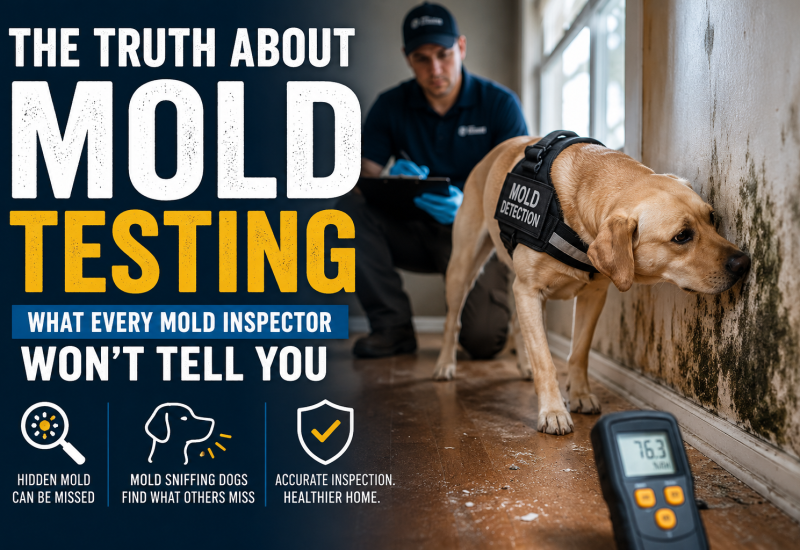
Mold Problems Are Often Bigger Than What You Can See
Most people think mold is easy to spot. If there is no strong smell or visible black spots on the wall, they assume everything is fine. The truth is, mold can hide behind drywall, under flooring, inside crawl spaces, and even inside HVAC systems without obvious signs.
That is where many homeowners get frustrated. They spend money on mold testing or hire a mold inspector, only to end up with unclear answers. In some cases, the mold source is never fully found.
That is why more homeowners are turning to advanced mold inspection methods that include a mold sniffing dog. These highly trained dogs can detect hidden mold quickly and accurately, helping families avoid expensive guesswork.
Why Traditional Mold Testing Does Not Always Tell the Full Story
Standard mold testing usually involves taking air samples or surface samples from certain areas of the home. While this can sometimes confirm mold spores are present, it does not always pinpoint where the mold is actually growing.
A few common problems with traditional mold testing include:
- Air samples only capture a moment in time
- Mold spores can move throughout the house
- Hidden mold behind walls may not appear in samples
- Moisture problems are often missed
- Homeowners may receive confusing lab reports
This is why some homeowners end up paying for repairs in the wrong area while the real mold problem continues to grow.
A quality mold inspector should focus on finding the source of the issue, not just collecting samples.
How a Mold Sniffing Dog Changes the Mold Inspection Process
A mold sniffing dog is specially trained to detect the scent of mold hidden inside homes and buildings. Their noses are incredibly powerful and can locate mold in areas people normally cannot access without tearing into walls or flooring.
During a mold inspection, the dog carefully searches the property and alerts the handler when mold odors are detected.
This can help identify hidden problems in places like:
- Behind drywall
- Under carpets
- Inside insulation
- Around plumbing leaks
- Beneath sinks
- Around windows and roofs
- Inside HVAC systems
Instead of relying only on random mold testing, a mold sniffing dog helps narrow down the exact problem areas. This saves time, reduces damage to the home, and helps homeowners make smarter repair decisions.
What Many Mold Inspectors Leave Out
Not all mold inspectors use the same methods. Some companies rely heavily on testing because it creates more billable services. Others may recommend expensive remediation before fully confirming where the mold actually is.
Homeowners deserve honest information before making major decisions.
Here are a few things many people are not told during the mold inspection process:
Mold Can Exist Without Visible Damage
A home may look clean on the surface while mold grows behind walls or under flooring.
Air Quality Symptoms Matter
Headaches, coughing, sinus problems, fatigue, and musty smells can all point to hidden mold exposure.
Moisture Is the Real Problem
Mold needs moisture to grow. A good mold inspector should look for leaks, humidity issues, or ventilation problems.
Testing Alone Does Not Solve the Problem
Lab reports can confirm spores exist, but they do not remove mold or identify every hidden source.
Early Detection Saves Money
Finding mold early can prevent major structural damage and costly repairs later.
The best mold inspection companies focus on accuracy, education, and helping homeowners avoid unnecessary stress.
Signs You May Need Mold Inspection or Mold Testing
Many people wait too long before calling a mold inspector. Mold problems often get worse over time, especially after leaks, flooding, or humidity issues.
You should consider a mold inspection if you notice:
- Musty odors
- Recent water damage
- Peeling paint or warped flooring
- Increased allergy symptoms indoors
- Visible discoloration on walls or ceilings
- Condensation around windows
- Persistent coughing or sinus irritation
- Previous plumbing leaks
- Mold returning after cleanup
A mold sniffing dog can be especially helpful when the source is difficult to locate.
Why Homeowners Trust Mold Sniffing Dogs for Faster Answers
One of the biggest benefits of using a mold sniffing dog is precision. Instead of opening multiple walls or guessing where the issue might be, the dog helps target specific areas that need further inspection.
That means:
- Less damage to your home
- Faster inspections
- More accurate mold detection
- Lower repair costs
- Better peace of mind
For many homeowners, this approach makes the mold inspection process feel less overwhelming and far more trustworthy.
FAQ About Mold Inspection and Mold Testing
Is mold testing always necessary?
Not always. In some cases, a detailed mold inspection with a mold sniffing dog may provide enough information to identify the problem areas.
Can a mold sniffing dog really detect hidden mold?
Yes. These dogs are professionally trained to detect the odor of mold growth in hidden spaces.
How long does a mold inspection take?
Most inspections take between one and three hours depending on the size of the property.
Is hidden mold dangerous?
Hidden mold can impact indoor air quality and may contribute to respiratory symptoms, allergies, and ongoing moisture damage.
What happens after mold is found?
The next step is usually identifying and fixing the moisture source before proper remediation begins.
Mold Testing and Mold Inspection
Mold problems are stressful enough without confusing reports or expensive guesswork. The truth is, mold testing alone does not always provide the full picture. Homeowners need real answers, accurate detection, and a clear plan forward.
That is why more families are choosing mold inspection services that include a mold sniffing dog. It is a smarter way to locate hidden mold, reduce unnecessary damage, and solve the problem faster.
If you suspect mold in your home, do not wait for the issue to spread. A professional mold inspector can help you uncover what is hiding beneath the surface and protect the health of your home and family.